

The Pragmatic Path to an Electric Vehicle Fleet
The smart move in 2026/2027 isn’t all-or-nothing. It’s figuring out which specific vehicles can switch today with the least risk, and letting your own usage data decide the order.
The smart move in 2026/2027 isn’t all-or-nothing. It’s figuring out which specific vehicles can switch today with the least risk, and letting your own usage data decide the order.

The transition to electric vehicles (EVs) is one of the most talked-about shifts in fleet management and one of the most misunderstood. The headlines imply a wholesale switch is imminent. The reality in most yards is more measured: a large majority of light commercial fleets still run no electric vehicles at all, with range, chargingaccess and upfrontcost cited as the reasons. The regulatory picture has only gotten noisier, with federal standards loosening while several states press ahead with their own zero-emission requirements. Against that backdrop, the smart approach isn’t all-or-nothing. It’s selective, route-led adoption.
The question that actually matters is not how fast you can electrify, but which specific vehicles can switch today with the least operational risk. And the answer is already sitting in your operation, in the daily mileage, route profiles and downtime patterns of every vehicle you run.
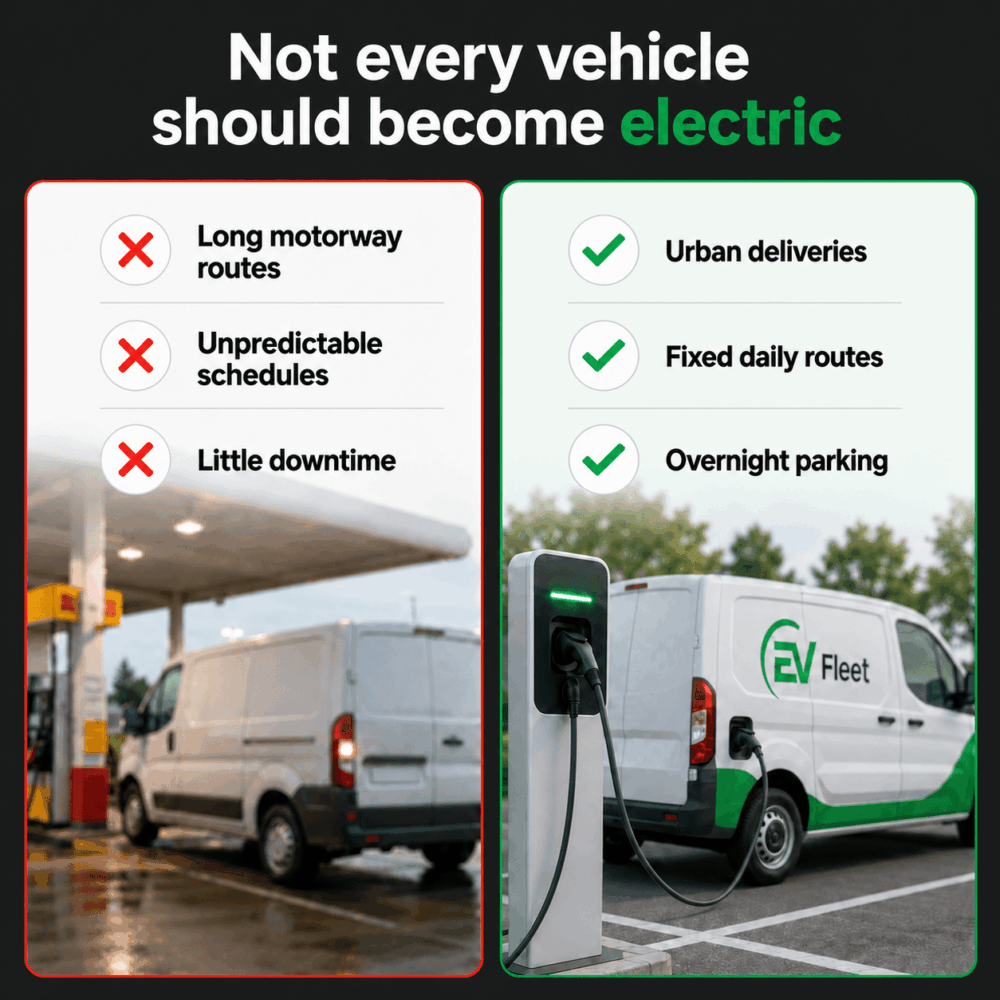
Some vehicles are obvious candidates. A van running a predictable urban route comfortably within electric range, parked at a depot overnight where it can charge, is a low-risk first switch. Others, the long-haul or unpredictable high-mileage vehicles, are not ready, and forcing them onto electric prematurely creates exactly the range anxiety and downtime that gives EV transitions a bad name. Telling the two apart from assumption is a gamble. Telling them apart from data is a plan.
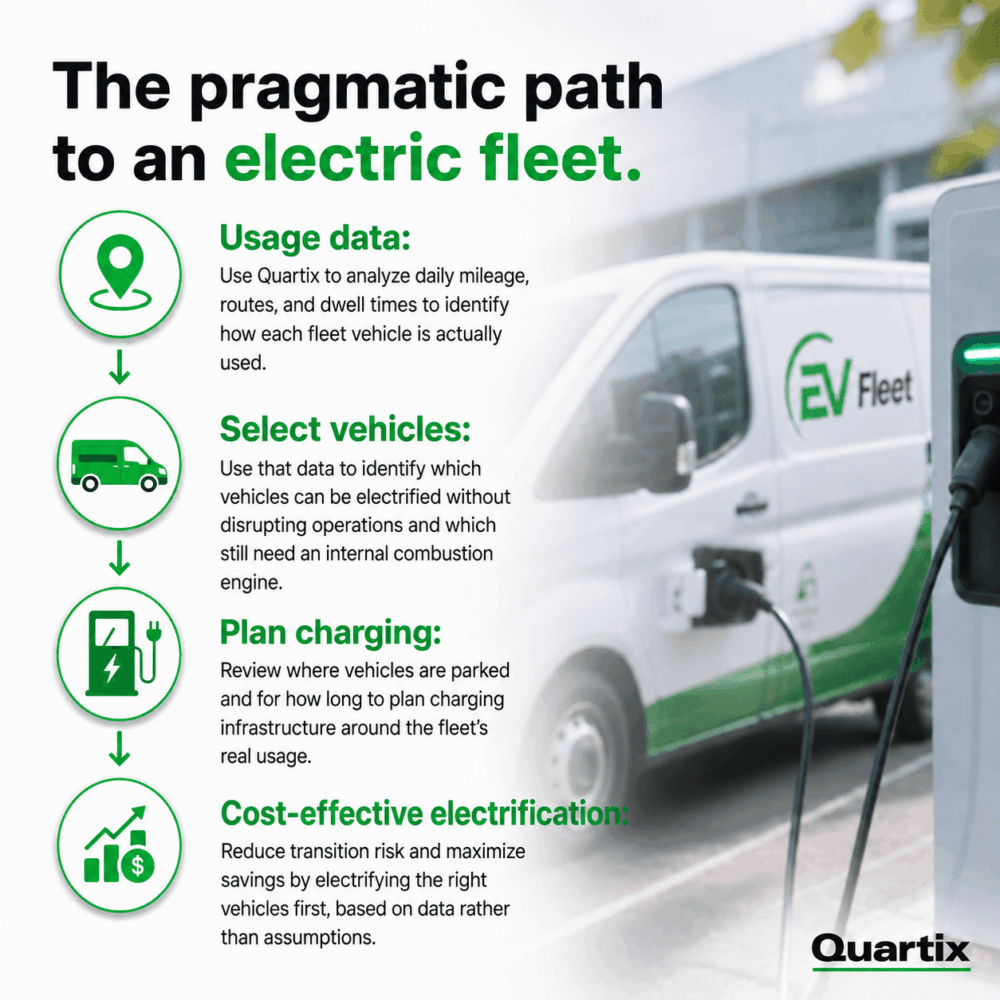
This is why usage data is the foundation of a sensible transition. An honest look at how each vehicleis really used turns guessworkinto a roadmap: which vehiclesto switch first, what charging you actually need, and where to wait. Utilization reporting that shows real daily mileage and dwell time is what lets you make that call with confidence rather than hope.
For years to come, most fleets will run electric and gas or diesel vehicles side by side. That mixed fleet has to be managed as a single operation, not two parallel ones. The platform you use needs to handle both, so you’re tracking conventional and electric vehicles with the same visibility, watching utilization across the whole fleet, and not juggling separate systems to do it.
Once electric vehicles are on the road, tracking them works much like tracking anything else, with the added value of seeing battery and charging patterns alongside location. The point is continuity: the same dashboard, the same reports, the same way of running the day, whether a given vehicle plugs in or fills up.
The transition to electric vehicles (EVs) will eventually affect every fleet. The operators who come through it best let real usage data decide the sequence, instead of letting a deadline or a headline force a switch the operation isn’t ready for.
One thing that trips up otherwise sensible transitions: operators focus on the vehicles and underestimate the charging. The truck is the easy part. The harder questions are whether your depot has the electrical capacity to charge several vehicles overnight, how long the utility will take to upgrade your connection if it doesn’t, and whether a given vehicle actually sits still long enough, in the right place, to charge before its next shift. Those answers determine the pace of a realistic transition far more than the range of any particular model.
This is another reason usage data is the place to start. Before you commit to chargers or a connection upgrade, the dwell-time patterns in your own data tell you how much charging you genuinely need and where, so you size the infrastructure to the reality rather than to a brochure scenario. Getting that sequence right, data first, then vehicles, then charging matched to actual dwell time, is what separates the transitions that save money from the ones that create headaches. It also keeps your capital working, because you’re building charging where the vehicles actually are rather than where you assumed they’d be.
State-level rules are still pushing toward zero-emission requirements in parts of the country, and sustainability reporting is becoming a routine business expectation rather than a nice-to-have, especially for anyone bidding on contracts with larger companies or public agencies. Both make a planned transition wiser than a reactive one. But planned does not mean rushed. The fleets getting this right are converting the vehicles that suit electric today, learning as they go, and expanding as the technology, the infrastructure and their own confidence mature.
Start with the vehicles your data says are ready, prove the model on those, and let the rest follow when the numbers, not the noise, say so. That approach captures the running-cost and access benefits where they exist today without betting the operation on routes that aren’t suited to it yet. If you want a clearer view of which of your vehicles fit that profile, the Quartix tracking platform is built to surface exactly that.

We’ll help you decide which vehicle tracking option is right for you


Top-rated fleet tracking, zero setup fees. Limited time offer for new customers.
Get the discount