

Tips for running a greener fleet
In honour of St. Patrick’s Day, we explore the different ways that fleets can “go green.”
In honour of St. Patrick’s Day, we explore the different ways that fleets can “go green.”

Operating a greener fleet reduces carbon emissions reduces costs and increases productivity for businesses of all sizes. In honor of St. Patrick’s Day, we’re exploring the different ways companies can “go green.” To mark the event, the Quartix team have gone green, literally!
A good vehicle tracking system helps many businesses improve their carbon footprint. This comes with the added benefit of reports and tools that allow them to measure driver performance, a key factor in reducing overall emissions. Others rely on Eco-Driving, a style of driving behavior that can reduce fuel consumption and minimize vehicle maintenance which costs money and time.
Here are a few simple ways that you can run a greener fleet.


Monitoring driving style across your fleet can help you lower instances of speeding and reduce harsh braking and acceleration. If your system provides each of your drivers or vehicles with scores based on these three criteria, it’s easy to see where improvements need to be made, especially if the system displays the scores in a league-style table. Speed analysis reports let you see specific instances where a driver exceeded the speed limit or went above a certain speed threshold.
Improving your fleet’s driving style minimizes CO2 emissions from your vehicles, helps save fuel and reduces the risk of accidents on the road, making your fleet safer and cheaper to run.
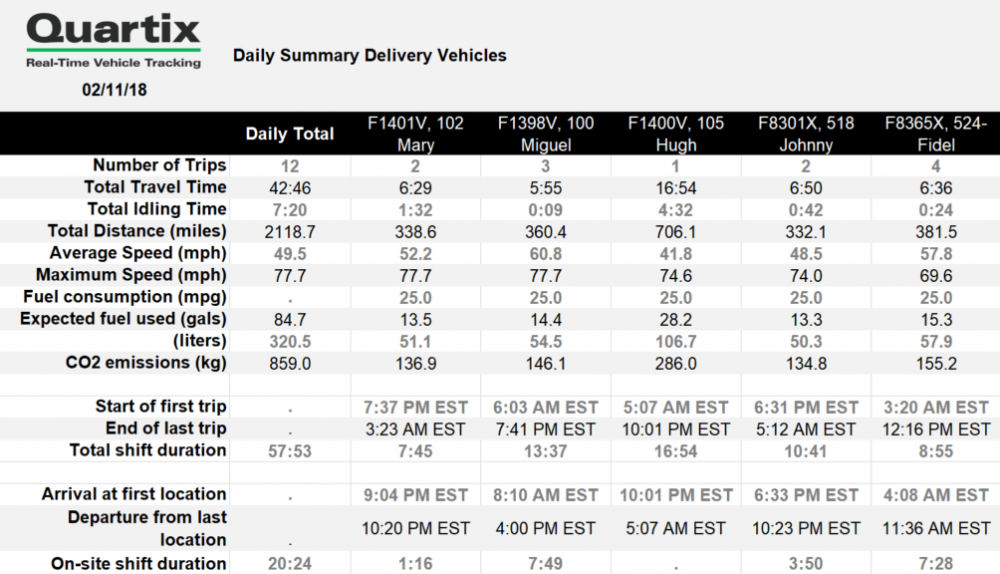
Vehicle tracking shows you the total mileage for your fleet. Driving hours and idling times over a specified period are displayed in simple, easy to read reports, whether you need to see the data by driver or by vehicle. Acting on this insight can improve overall productivity and reduce employee overtime by up to 15%.
A good system shows you the routes your drivers are taking every day, letting you see where they overlap. Armed with this knowledge, you can streamline your drivers’ daily routines, eliminating unnecessary vehicle usage and the emissions that go with it.
Traffic is the number one source of idling, but live tracking with traffic information can help your drivers avoid areas of severe congestion, allowing them to take routes that will keep them moving. Instances where the engine is left running unnecessarily, for example when the vehicle is parked, can also be identified and corrected.
Knowing how your drivers are performing out on the roads can help you to decrease idling times by up to 30%. Identifying where your drivers can decrease idling not only saves fuel, it also reduces the emissions your vehicles are releasing into the atmosphere.
Eco-driving, or energy-efficient driving, is a way of driving that reduces fuel consumption and CO2 emissions, while decreasing the risk of accidents. For companies who adopt eco-driving, it can lead to significant savings, both in terms of fuel use and vehicle maintenance.
Embarking on an eco-driving initiative requires thought, planning, and awareness. The idea is for employees to drive smarter, better and to develop good driving practices. There are two points within a journey where simple actions will ensure that you and your employees are driving safely and efficiently.
When preparing for a trip and while on the trip, be sure to:
Creating a greener fleet is a long-term commitment, but it won’t just be the environment seeing the benefit—your bottom line will see the difference, too. With ever increasing guidelines on emissions and fuel efficiency, having a good vehicle tracking system or a policy of eco-friendly driving will help your organization get ahead of the curve.
Download or eco driving guide to learn more!

We’ll help you decide which vehicle tracking option is right for you


Top-rated fleet tracking, zero setup fees. Limited time offer for new customers.
Get the discount