


The Danger of Hands-Free Calls on the Road: A Call to Action
Hands-free calls aren’t risk-free. Learn how cognitive distraction impacts driver safety and what your business can do to reduce the risks.
Hands-free calls aren’t risk-free. Learn how cognitive distraction impacts driver safety and what your business can do to reduce the risks.
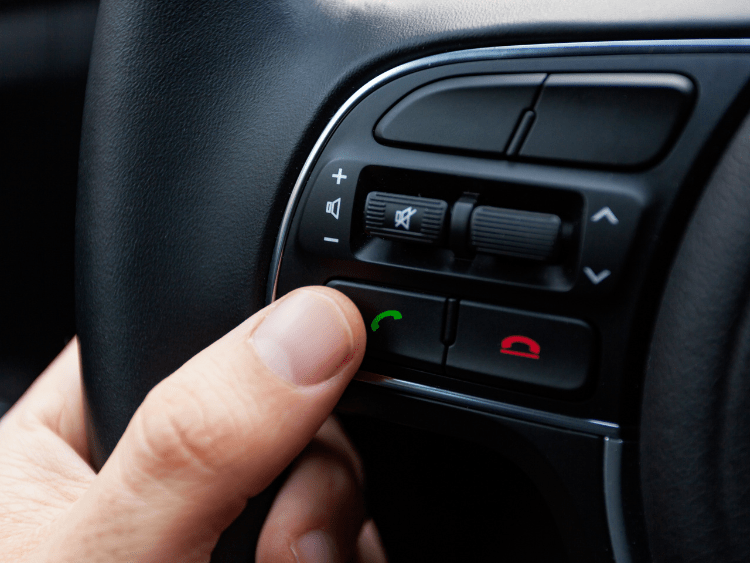
While many companies enforce strict policies warning staff against using handheld devices when driving, taking hands-free calls is often accepted, and even encouraged, as a safer alternative. However, research indicates that hands-free phone use can be just as distracting and dangerous as using handheld devices when we’re behind the wheel.
Professor Gemma Briggs of The Open University shares her research on driving while participating in a hands-free phone call.
“The human brain isn’t like a computer… What we do is shift between two tasks, and there’s a momentary lag called a resumption lag when we shift back to the first task.”
This cognitive distraction, known as “inattentional blindness,” means drivers may fail to notice hazards directly in their line of sight. “In some of our laboratory studies we’ve presented a hazard directly where someone is looking – and we know they are looking at it because we’ve got an eye tracker on them – but they fail to see it,” says Briggs.
The Open University also conducted a study involving 470 police officers from the United Kingdom, suggesting that hands-free conversations cause significant cognitive distraction, impairing reaction times and hazard awareness. After participating, 88% of officers reported a shift in perspective, acknowledging the risks of all mobile phone use while driving, not just hand-held. Despite this, the law allows hands-free device use when driving, reinforcing a dangerous misconception: that hands-free means risk-free.
The reality is that drivers engaging in hands-free calls suffer from cognitive distraction – their minds are split between the road and the phone conversation. This impairs reaction times, reduces hazard awareness, and significantly increases risk of collision.
Laws on mobile phone use while driving vary by state, making compliance essential for fleet operators.
For businesses operating across states, a company-wide no-phone policy while driving can help ensure compliance and improve safety.
However, drivers can utilise devices with hands-free access, such as bluetooth headsets or voice commands, provided they do not hold them during use and ensure the devices do not obstruct their view. But police can stop you if you do not have full control of your vehicle; and this can result in prosecution.
If you are involved in a collision, your phone data can confirm you were in a phone call at the time of impact, and regardless of whether you took the call hands-free, this can suggest driving without due care and attention.
For businesses with driving-for-work policies, allowing hands-free calls may seem like a productivity boost, but it puts employees, and other road users, at unnecessary risk. Drivers engaged in hands-free conversations experience divided attention, impairing their reaction times and hazard awareness. This not only jeopardizes their, and other’s, safety but also exposes your company to potential accidents, legal liabilities, and reputational damage.
Prioritizing your company drivers’ undivided attention to driving tasks is essential for ensuring safety on the roads, and many businesses rule against hands-free mobile phone use in their driving for work policies.
To understand just how distracting hands-free phone use can be, take part in this simple exercise produced by the Open University in the UK.
Many people struggle to recall both accurately, showing how divided attention impacts our ability.
The Kier Foundation, in collaboration with Nottingham Trent University, conducted a project focusing on professional drivers’ attitudes toward hands-free phone use. The study uncovered that many drivers believe hands-free use is safe because it is legal, leading to breaches of zero-tolerance policies. To address this, a myth-busting video was produced, aiming to challenge these misconceptions, change behaviour, and reduce distraction-based collisions among fleet drivers.
If you found this evidence compelling and want to mitigate the risks of hands-free phone use during your business trips, consider the following actions:
Hands-free phone use is just one element of a broader discussion on road safety and driving-for-work policies. Driving for Better Business has some fantastic best practice guidance for organisations and educational frameworks to help combat road risk and improve driver safety.
To proactively address road safety in your business, you can:
Hands-free phone use while driving may be legal, but that does not mean it is safe. The cognitive distraction caused by phone conversations behind the wheel can be as dangerous as using a handheld device.
A business’ duty of care extends beyond compliance; it’s about actively reducing risk and fostering a culture of safety. By implementing stricter policies, educating employees, and leveraging technology like telematics and driver monitoring, companies can significantly reduce distraction-related crashes.
For further insights into the dangers of mobile phone use while driving, explore Brake Safety’s resource centre and access the Driving for Work policy templates from Driving for Better Business.
Want to take proactive steps to improve fleet safety? Book a free demo to see how our fleet tracking system and commercial dashcams can help you monitor driver behavior and improve road safety across your business.
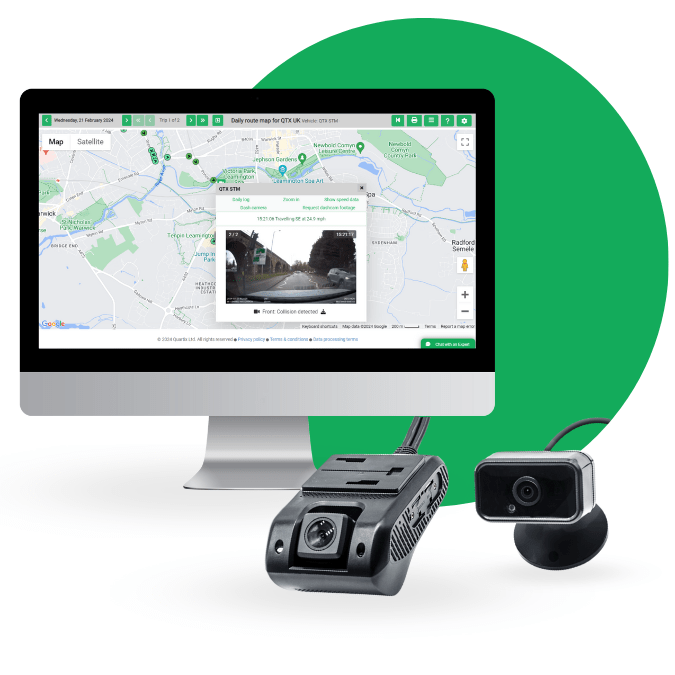

We’ll help you decide which vehicle tracking option is right for you


Top-rated fleet tracking, zero setup fees. Limited time offer for new customers.
Get the discount