GPS Fleet Tracking for Highway Construction & Maintenance Safety
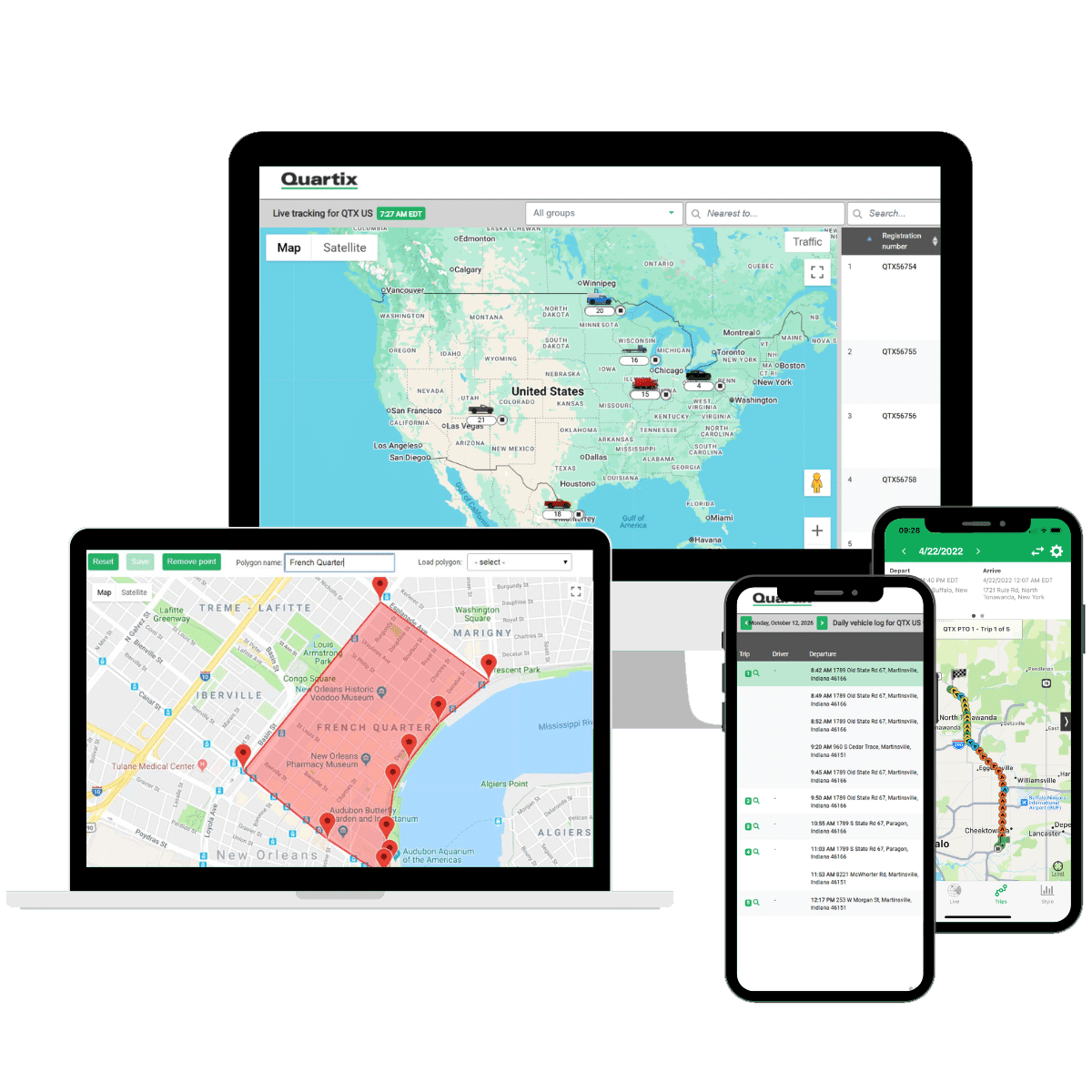
From road construction and pavement marking to traffic control and winter maintenance, Quartix helps you see where fleet vehicles are, understand how they are being used and respond when plans change. Give dispatchers and project managers a clearer picture of every shift, without relying on constant phone calls.
Championed by 23,000 Fleet Managers worldwide


WJ Road Markings
DRIVING CHANGE
“Quartix driver behaviour reports have saved us £160,000. A 12% improvement in MPG and reduced CO2 emissions, plus fewer vehicle breakdowns and far less workshop hours… Results like these are precisely why we use telematics.“
Scott Logan, Transport Manager, WJ Road Markings
WJ Road Markings is a UK-based road-marking contractor whose fleet included approximately 420 vehicles at the time of Quartix’s published customer study. Many vehicles work at night, when crews must reach scheduled work zones and return safely with specialized equipment. With Quartix vehicle-tracking data and a driver-training program, WJ set out to improve fuel efficiency, reduce fleet costs and support safer driving.
Reported results:
• 12% improvement in fuel economy (MPG): reported after approximately one year of using Quartix alongside a program to improve driving habits.
• £26,000 saved in fuel costs: a figure published in WJ’s UK Quartix case study; not a US-dollar estimate.
• 65% fewer heavy-truck accidents: the reduction in HGV accidents reported by WJ; results are specific to its UK fleet.
• £160,000 reduction in vehicle maintenance costs: WJ also reported fewer breakdowns and less time spent in the workshop.

WJ
Transport Manager
Scott Logan
FLEET
420 vehicles
MAINTENANCE SAVINGS
£160,000
HGV ACCIDENTS
-65%
FUEL SAVINGS
£26,000
Why Quartix?
Turn scattered roadwork shifts into a clearer operation
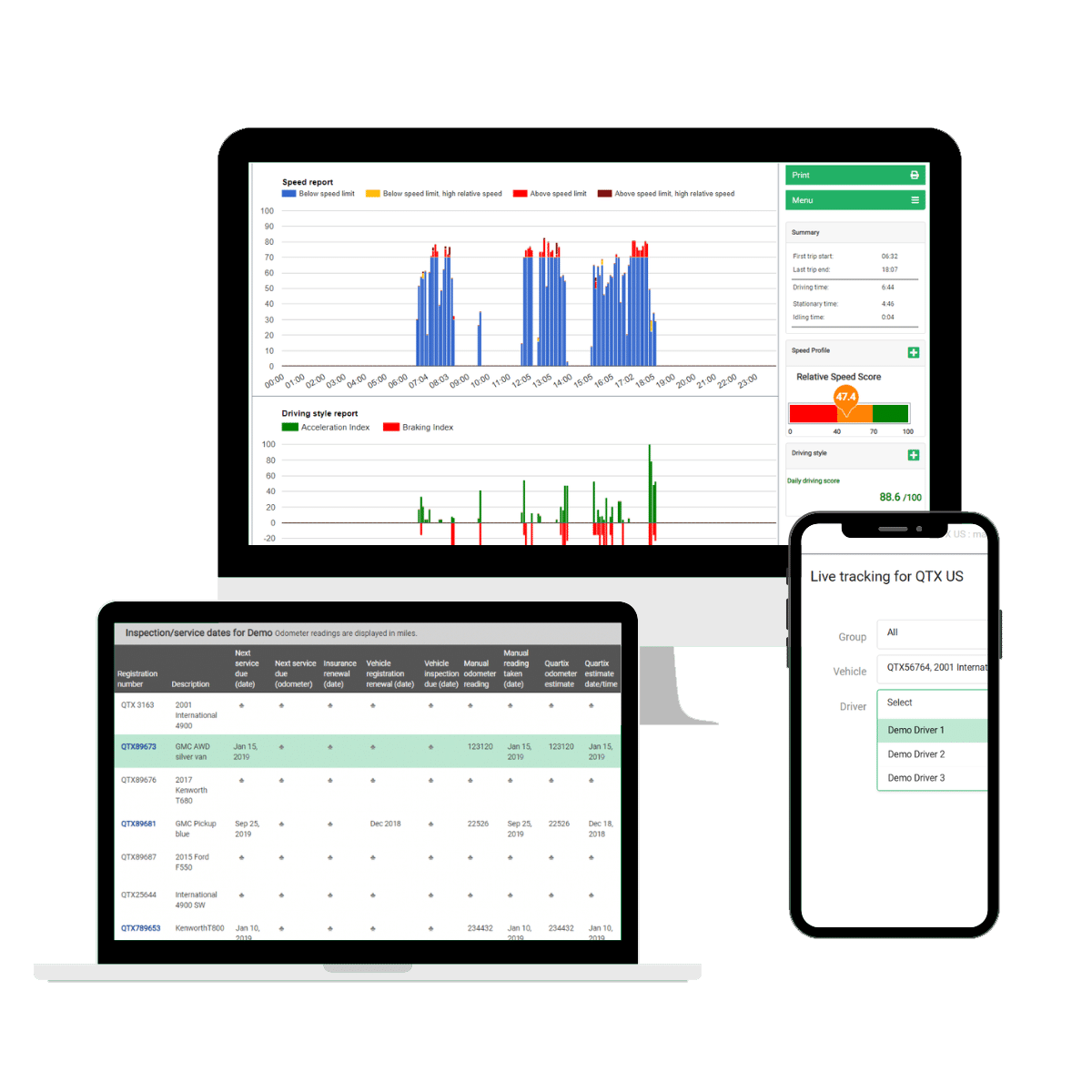
Quartix offers reliable telematics for the highways industry to ensure the safety of workers and fleet vehicles, particularly during the night when many projects are carried out.
• Know which truck is closest when a lane closure changes or a supervisor needs support.
• Reduce calls between the dispatcher, depot and contractors by sharing reliable vehicle locations.
• Compare recorded site arrivals, departures and trips when reviewing project timesheets or customer questions.
• Review speeding, harsh acceleration and harsh braking patterns to guide driver coaching.
• Keep service intervals, registrations and other vehicle due dates visible before equipment is needed for a night shift.
GPS visibility supports coordination, but it does not replace site-specific safety plans, required traffic-control procedures, DOT rules or actual work-completion records.
Your challenge
One tracking system for four types of highway work
ROAD CONSTRUCTION AND PAVING
Coordinate dump trucks, support vans and supervisor vehicles moving between plants, yards and active job sites. Check recent routes, arrival times and vehicle time at each location so site teams can answer delivery and scheduling questions with records rather than guesswork.
PAVEMENT MARKING AND LINE STRIPING
Track the vehicles assigned to short overnight windows and multiple lane-marking locations. Review where each fitted vehicle traveled and when it arrived or left; plan the next shift with fewer unnecessary trips to the yard.
TRAFFIC MANAGEENT AND WORK ZONES
See traffic-control trucks, attenuator-support vehicles and supervisor vans across dispersed work zones. Geofence staging yards or work sites, then use arrival and departure alerts to coordinate teams.
HIGHWAY MAINTENANCE AND WINTER OPERATIONS
Coordinate pothole-repair crews, vegetation-management vehicles, inspection teams and winter-response trucks across wide service areas. During snow or ice events, use live vehicle positions and trip history to support dispatch and after-action reviews—not to measure salt application or confirm that a lane has been cleared.
In practice
What a highway shift looks like with Quartix
• Before the shift: check vehicle locations and last trips, then assign the closest available support vehicles to each work zone.
• During the shift: monitor live maps, receive relevant entry/exit alerts and respond if a truck heads to the wrong site.
• After the shift: review trip history and vehicle-based time-on-site reports for planning, activities and queries.
Reducing fleet emissions
By encouraging better driving habits through our driver behaviour reporting, you can demonstrate commitment to lowering your fleet’s fuel costs and CO2 emissions. With our fleet emissions reports and driving style trends, you can better identify poor driving habits and encourage driving styles that are guaranteed to improve these metrics.

Employee engagement
Our real-time tracking and finish/start time audits give you a comprehensive look at how your fleet is performing so that you can make informed decisions to optimise team performance. Get a better understanding of workers’ productivity, efficiency, and overall fleet operations with real-time KPI alerts and daily driver logs.

Greener, safer roads for all
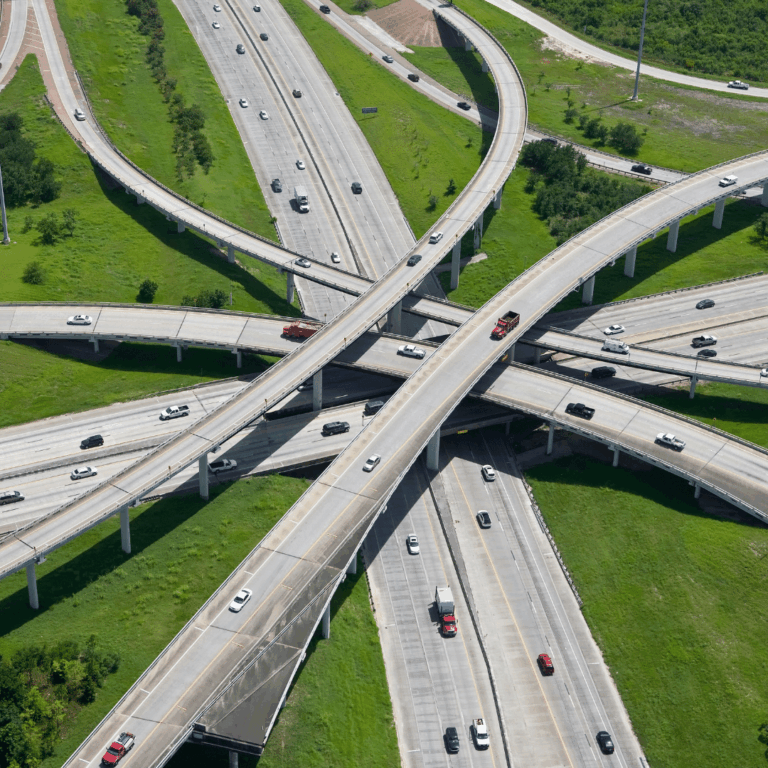
Leveraging telematics to boost carbon-efficiency and improve road safety is an innovative approach that can transform a highways operation. Using our vehicle tracking system data insights, you can dramatically reduce your fleet’s carbon footprint, create significant cost savings, and improve road safety with ease.

Let’s make a difference together
See all the features in action
See on video every function discussed above: Live Tracking Demo, Geofencing Demo, Daily Driver Logs Demo, Driving Style Reports Demo and Custom Locations Demo
Video Tutorials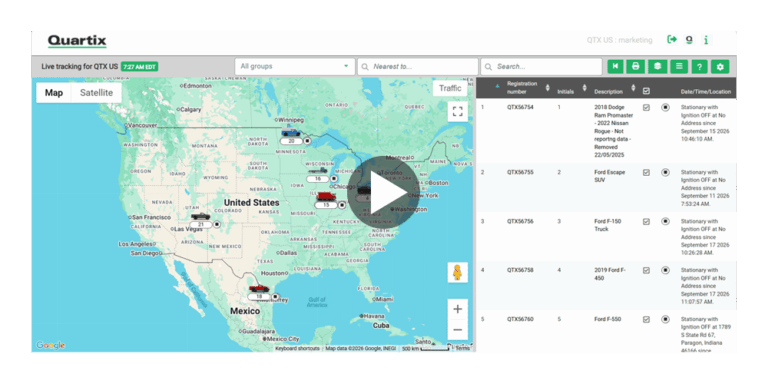
Frequently Asked Questions
Yes. With a Quartix GPS device fitted to the vehicle, your team can see its reported location, review previous journeys and use relevant alerts. The system tracks vehicles, not the placement of cones, the quality of line markings or the completion of paving work.
Driver ID can help link vehicle journeys to individual drivers, subject to the required setup and correct driver identification.
Quartix Check is available in the US as a separate vehicle-inspection app. It supports inspection records and defect reporting; your business remains responsible for the required inspections and regulatory requirements.