


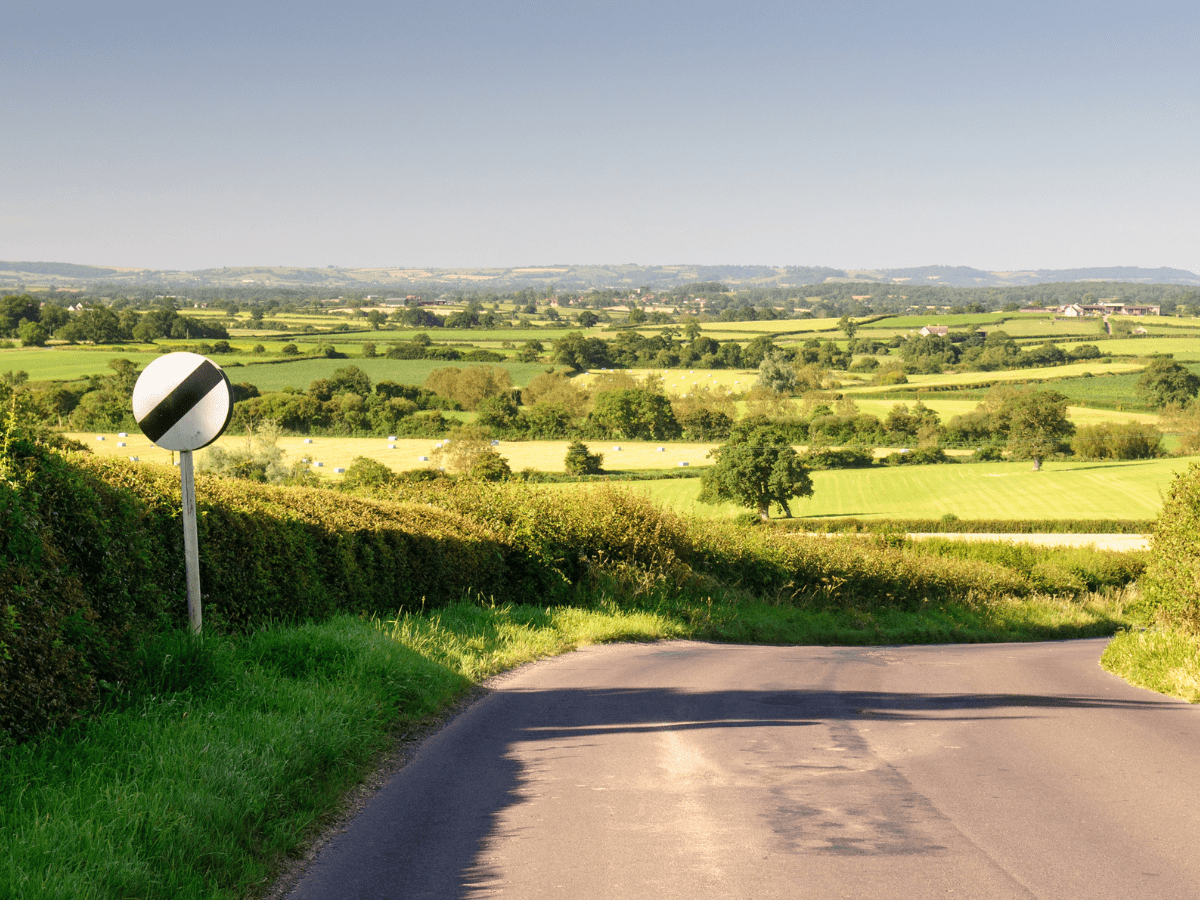
What Speed Is Actually Safe on Rural 60mph Roads?
The national speed limit isn’t a safe-speed benchmark. Our analysis of millions of journeys shows what drivers really do on rural roads, and what it means for managing risk in your fleet.
Driving below the limit doesn’t always mean driving safely
- Understand the risk: See why rural roads are the most dangerous road type in England
- See the real picture: Learn what speeds drivers choose on over 1.8 million road segments
- Manage it better: Find out how relative speed scores highlight risks that a posted speed limit would hide
What’s in the guide?
Our guide walks you through:
- The most dangerous road type: The key statistics on rural road collisions, and why even small speed reductions matter (every 1mph off average speed cuts collision risk by 5%).
- How speed limits are set: Why 60mph applies to so many very different roads, and what really influences the way we drive.
- What the data reveals: Top speeds on 60mph roads, compared across rural and other road types.
- A better measure of safety: How Quartix SafeSpeed and relative speed scores show how far a driver’s speed deviates from what’s safe on the roads they use.

Who is this guide for?
Designed for anyone responsible for people who drive for work. It’s ideal if you:
- Manage a fleet that regularly uses rural or unclassified roads
- Want to reduce collision risk and the cost of incidents
- Need a more meaningful measure of driver risk than speed limit compliance alone
“I think the kind of rich data that businesses can pull from systems such as Quartix is invaluable. I’ve always liked Quartix’s SafeSpeed feature. We know that speed is a significant cause of collisions and certainly makes them more serious.”
Get your copy of the guide
Find out what a safe speed really looks like on the UK’s rural roads, and how to spot the drivers who take the biggest risks.
Your vehicle tracking FAQs
In our analysis, SafeSpeed is the speed below which 90% of tracked vehicles travel on a given road, rounded to the nearest 10mph. It reflects the speed drivers collectively judge safe for that road’s layout, visibility and conditions.
We analysed millions of journeys across over 1.8 million segments of UK 60mph single carriageways, using only roads with 100+ speed datapoints recorded over the last year. Rural roads were defined using OpenStreetMap filters: tertiary or unclassified, single carriageway, two-way and unlit.
The SafeSpeed database powers Quartix’s driver behaviour scores. A relative speed score measures how far a driver’s speed deviates from the SafeSpeed of the roads they use. The higher the score, the greater the risk. Learn more about SafeSpeed.
On many rural roads, a driver can travel well below 60mph and still be going too fast for the conditions. Measuring against the limit alone hides that risk.

Want to manage driver risk based on what’s actually safe, not just what’s legal? Discover Quartix driver behaviour monitoring and SafeSpeed scoring.

