

Electrification of the vehicle fleet: the right approach based on real data
The question is not how quickly you make the switch, but which vehicles
can be electrified today with the least risk. The answer lies in your
own vehicle tracking data.
The question is not how quickly you make the switch, but which vehicles
can be electrified today with the least risk. The answer lies in your
own vehicle tracking data.
The electrification of a vehicle fleet is often discussed as a fundamental decision: internal combustion engines or electric, now or later. In practice, it is something quite different: a series of individual, well-founded vehicle decisions. The crucial question is not how quickly you switch over your entire fleet, but which specific vehicles can be electrified today with the least risk. And the answer to that question already lies within your business, in the daily usage data for each individual vehicle.
The question that actually matters is not how fast you can electrify, but which specific vehicles can switch today with the least operational risk. And the answer is already sitting in your operation, in the daily mileage, route profiles and downtime patterns of every vehicle you run.
Some vehicles are obvious candidates. A van that travels a predictable route well within its electric range and is parked at the depot overnight, where it can be charged, is a low-risk transition. Others, such as vehicles with high or irregular long-distance journeys, are not yet suitable. If they are converted too early, this will lead to precisely the range issues and downtime that unfairly give electric vehicles in fleet operations a bad reputation.
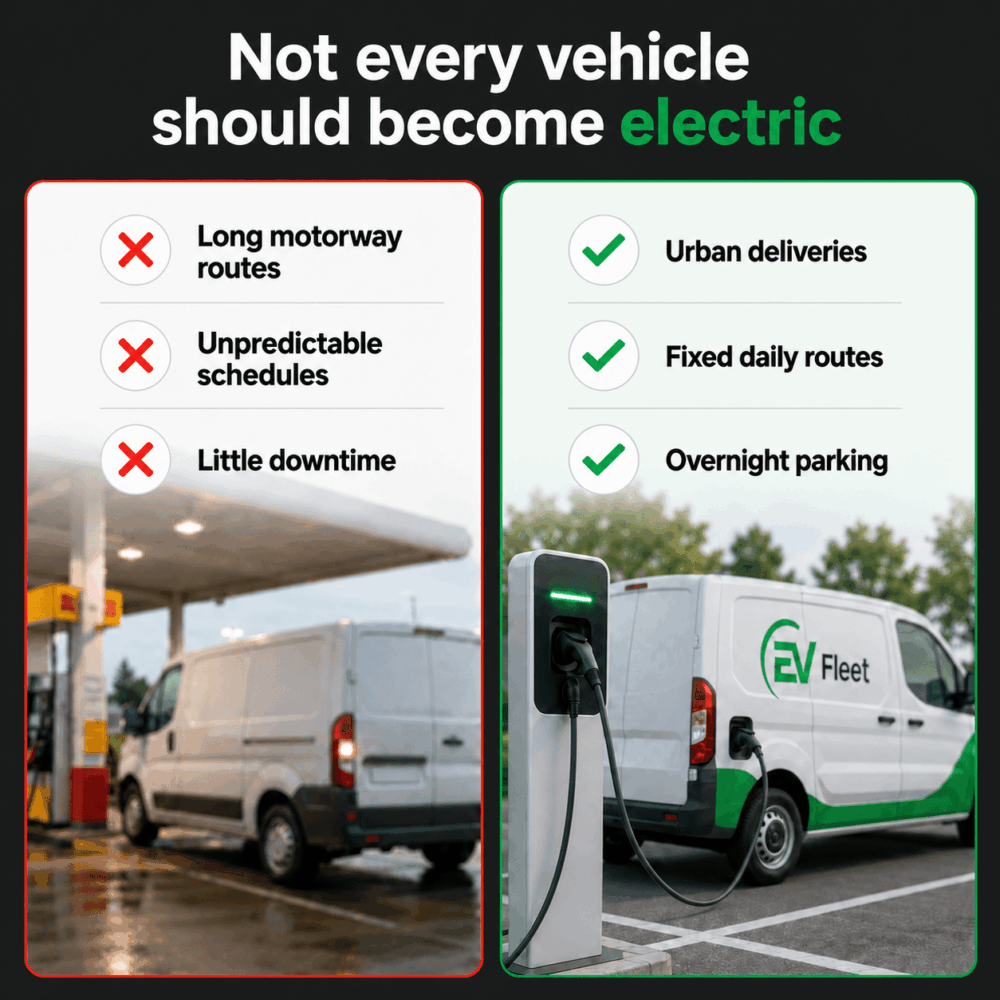
Distinguishing between these two groups on the basis of assumptions is a gamble. Distinguishing between them on the basis of data is a plan. Three key figures provide the answer:
Quartix’s vehicle tracking makes this usage data visible and analysable. This transforms an abstract question of principle into a concrete sequence of actions: which vehicle to prioritise, which charging infrastructure is actually necessary, and where you should hold off for the time being.
Electrification is not a single, major decision. It is the result of well-reasoned individual decisions, and the rationale for these is provided by your own vehicle tracking data.
One mistake that is holding back what are otherwise well-planned transitions is that many businesses focus on the vehicles themselves and underestimate the challenges of charging them. The vehicle is the easy part. The more difficult questions are whether your depot has the necessary electrical capacity to charge several vehicles overnight, how long it will take the network operator to carry out any necessary upgrades if it doesn’t, and whether a vehicle will even be parked in the right place for long enough to be fully charged before its next assignment.
This is precisely why vehicle tracking using data is the right starting point, including for the infrastructure. Before you invest in charging points or a network expansion, the parking times in your own data will show you how much charging capacity you actually need and at which locations. This allows you to scale the infrastructure to reflect reality rather than a theoretical scenario, and to allocate your capital where the vehicles are actually parked. The success of the transition depends on getting the order right: first the data, then the vehicles, and finally the charging infrastructure tailored to actual parking times. This reduces costs rather than creating new problems.
The trend for the coming years is that most companies will operate both electric and petrol or diesel vehicles side by side. That mixed fleet has to be managed as a single operation, not two parallel ones. The platform you use needs to handle both, so you’re tracking conventional and electric vehicles with the same visibility, watching utilization across the whole fleet, and not juggling separate systems to do it.
Once electric vehicles are in use, tracking them works essentially the same as for any other vehicle, with the added benefit of monitoring range and charging cycles. With real-time tracking, you can monitor actual ranges rather than optimistic figures from brochures, enabling you to assign the right vehicle to the right route. This consistency – the same analytics and the same day-to-day management regardless of the type of powertrain – is crucial to ensure that the transition does not create additional administrative burdens.
The lower running costs and the local access restrictions on older diesel vehicles all make a strong case for not putting off the switch. However, being proactive does not mean rushing into things. The companies leading the way are currently converting the vehicles that are suitable for this, gaining experience and expanding the switch as technology, infrastructure and their own safety measures improve.
Start with the vehicles your data says are ready, prove the model on those, and let the rest follow when the numbers, not the noise, say so. That approach captures the running-cost and access benefits where they exist today without betting the operation on routes that aren’t suited to it yet. If you want a clearer view of which of your vehicles fit that profile, the Quartix tracking platform is built to surface exactly that.
Find more information to this topic in our guide: The Road to Electric

We’ll help you decide which vehicle tracking option is right for you


Top-rated fleet tracking, zero setup fees. Limited time offer for new customers.
Get the discount