




Winter Driving Safety: A Practical Guide for Businesses With Company Vehicles
If your business depends on vehicles, whether that’s 2 vans and a handful of engineers or a much larger fleet with scheduled routes, winter brings added pressure. This guide helps you create a simple, repeatable system that helps drivers make safer decisions and helps your business stay operational.
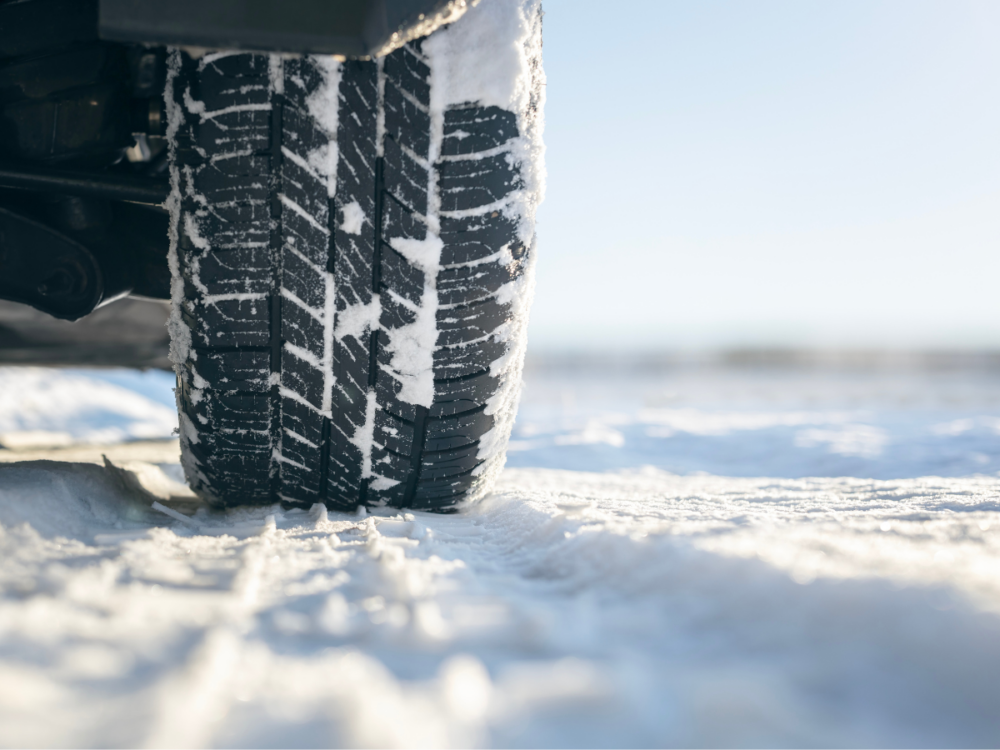
When winter makes roads dangerous, running your business becomes harder.
If your business depends on vehicles, whether that’s 2 vans and a handful of engineers or a much larger fleet with scheduled routes, winter brings added pressure. Work still needs doing, even when roads are icy: customers still expect appointments to be kept, drivers need to get home safely, and a single incident can take a vehicle off the road, disrupt the week, and increase costs.
By creating a simple, repeatable system, you can help your company drivers make safer decisions and help your business stay operational in Winter.
This guide covers practical winter driving advice for company drivers, plus a straightforward winter fleet safety programme you can implement, supported by vehicle tracking tools, dashcams and vehicle safety checks.
Winter fleet safety in 3 steps
Do these three things this winter:
- Make daily vehicle checks routine (tyres, lights, windscreen, fluids)
- Set clear “slow down and drive smoothly” expectations with your team (longer stopping distances, gentle braking)
- Use tools to reduce risk and resolve incidents quickly (such as telematics, dashcams, and documented safety checks)
Why winter driving matters for every business
Winter road risk affects every business. For a smaller business, one breakdown or collision can mean:
- A van off the road for days
- Cancelled jobs
- Missed revenue and customer frustration
- Higher insurance premiums
- Stressful investigations without clear evidence
For larger fleets, winter can also mean:
- Higher incident rates
- Increased maintenance and downtime
- Greater duty of care exposure
- More driver fatigue and schedule pressures to manage
The common thread is simple: winter increases risk and disruption is more likely.
A practical winter fleet safety system
The best winter driving programmes are consistent. Here’s a simple model you can adopt:
1. Prevent issues before they cause breakdowns: Use digital vehicle safety checks to make checks easy, consistent, and properly recorded.
2. Improve driving safety during the Winter season: Use vehicle trackers and driver behaviour insights to spot risk patterns and coach drivers early.
3. Protect drivers and the business when incidents happen: Use dashcams with crash detection to send help quickly, provide clarity, reduce disputes, and speed up investigations.
Winter vehicle checks: what every driver should do before setting off
In winter, many incidents start with simple, avoidable problems:
- Tyres not suited to conditions
- Poor visibility from worn wipers, low washer fluid, or faulty lights
- Defects not reported until they become urgent
The 2-minute daily winter vehicle check
This walkaround vehicle check is a realistic minimum standard for businesses before the day begins:
Tyres
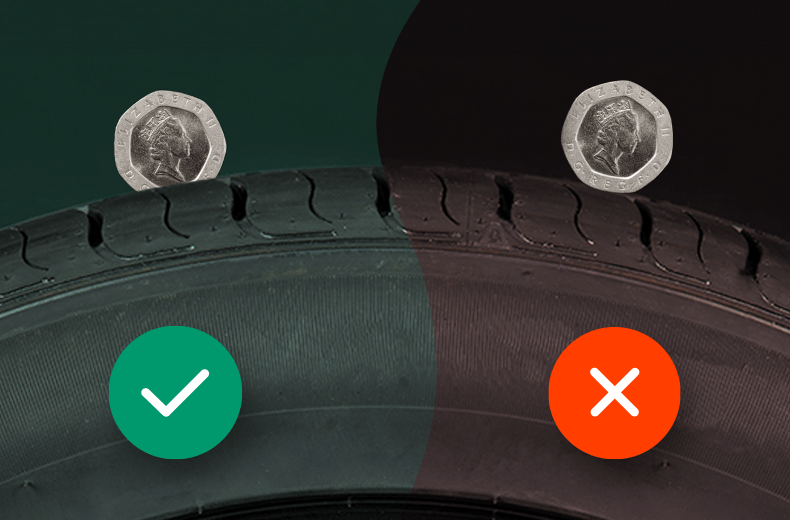
- Check tread, pressure, and visible damage
- Watch for uneven wear
- Check for warning lights
Learn more about the dangers of poor tyre health
Lights
- Dipped headlights, indicators, brake lights, fog lights
- Clean lenses – grime reduces visibility quickly
- Check for excessive glare
Windscreen + visibility
- Washer fluid topped up (winter grade)
- Wipers effective
- Demister working
- Mirrors and cameras clean
Brakes + handling
- Report any unusual noise, vibration or pulling
Fuel/charge
- Avoid starting the day on low fuel in severe weather in case your are diverted or delayed – get to the nearest fuel station.
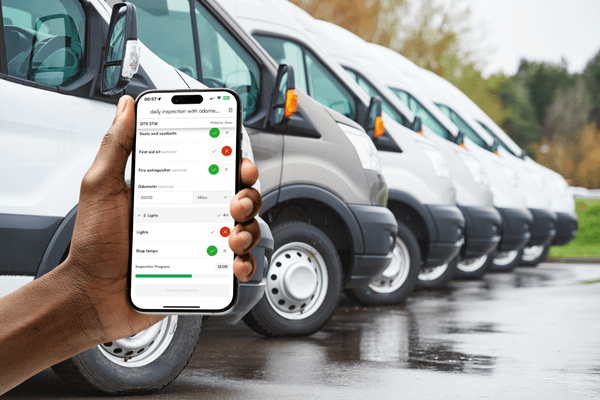
Keep vehicle safety checks consistent with Quartix Check
If you’ve ever had a “I didn’t notice” conversation after a breakdown, digital vehicle checks help. With our digital vehicle safety checks app, Quartix Check, drivers can complete and submit inspections quickly, report defects, and create an audit trail – useful for maintenance planning and duty of care documentation.
What to keep in every company vehicle in winter
A basic winter kit doesn’t cost much, but it can prevent a minor delay turning into a bigger issue:
- Hi-vis vest
- Torch
- Ice scraper and de-icer
- Warm gloves/blanket
- Water
- Basic first aid kit
- Phone charger/power bank
- Winter-grade windscreen washer fluid
If vehicles travel rural routes: consider adding a small shovel and traction aid.
Winter driving advice for company drivers
These behaviours reduce collisions most reliably in winter and we recommend you share them with your teams:
1. Slow down and increase following distance
Stopping distances rise sharply in winter:
- Wet roads = significantly longer stopping distances
- Ice = stopping distances can become dramatically longer
Practical rule:
- Use 4–6 seconds following distance in wet conditions
- Increase to 10 seconds in icy conditions
- Brake earlier and more gently
Why this matters for businesses: Rear-end collisions and “couldn’t stop in time” incidents are among the most disruptive. They create downtime, repairs, and insurance admin.
2. Drive smoothly: gentle braking, steering and acceleration
A lot of winter loss-of-control incidents come from harsh driving behaviours when grip is reduced.
- Brake progressively (“squeeze, don’t stamp”)
- Slow down before corners
- Avoid sharp steering
- Accelerate gently to reduce wheel spin
Coach teams using driver behaviour trends, not one-off events: Winter coaching is more effective when it focuses on patterns (e.g., repeated harsh braking) rather than isolated moments. Quartix driver behaviour insights help you spot where additional support or reminders are needed.
3. Watch for black ice in predictable places
If the road looks wet but there’s no spray from other vehicles, treat it as suspicious. Black ice is most common in the following conditions:
- Around 0°C to -3°C
- On bridges and overpasses
- In shaded areas
- Early morning and after sunset
4. Prioritise visibility: see and be seen
Winter visibility is often poor: fog, rain, darkness, headlight glare.
- Use dipped headlights in poor visibility
- Keep lights clean
- Use fog lights only when visibility is severely reduced
- Clear all windows fully
5. Know when to stop driving (and make it safe for drivers to say so)
One of the biggest winter risks is drivers feeling pressured to “push on”.
Set a clear rule: Drivers are empowered to pause or stop a journey if it becomes unsafe.
If conditions deteriorate, they should:
- Pull over safely
- Inform the office/their manager
- Reroute or reschedule where needed
This is a practical duty of care measure and it prevents bigger incidents.

Winter planning: reduce risk by reducing time pressure
To reduce winter incidents, consider driver schedules.
Build realistic winter routes and ETAs
- Add buffer time for journeys
- Avoid back-to-back jobs that leave no margin
- Treat rural “shortcuts” with caution
- Plan around known risk zones (steep hills, exposed roads)
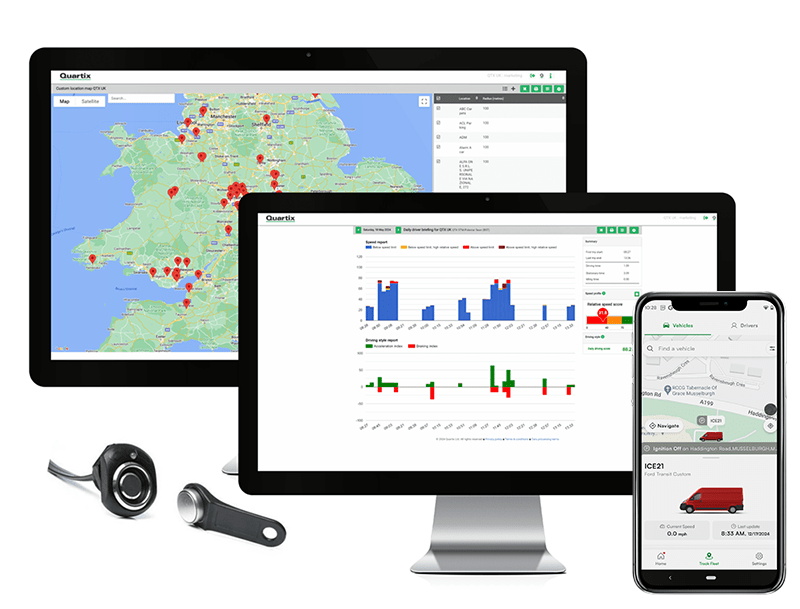
Quartix vehicle tracking helps you understand real journey times and typical delays, so you can set schedules that work in winter, reducing the pressure that often leads to speeding and harsh braking.
A winter driving policy every business should have
Whether you run a small team or a large fleet, a winter driving policy protects both people and the business.
Your winter driving policy should cover:
- Speed and following distance expectations in winter conditions
- Daily vehicle checks and a vehicle defect reporting process
- Rules on driving behaviour and rushing (“late is better than unsafe”)
- When to stop driving (and what to do next)
- Incident reporting and investigation steps (including video/evidence where available)
It’s crucial to communicate that safety comes before schedules. Drivers should not feel pressured to continue in unsafe conditions. If conditions are hazardous, they should stop safely and contact the office.

How Quartix helps you run a safer winter fleet
Quartix supports winter safety by giving you visibility, evidence, and repeatable processes all year round, without the guesswork.
Digital vehicle safety checks
Build vehicle checks into daily operations, create an audit trail, and reduce missed defects. Winter breakdowns often come down to avoidable issues: tyres, lights, wipers, fluids.
Quartix Check makes it easy for your drivers to:
- Complete daily checks
- Report defects quickly
- Record issues clearly (supporting repair workflows)
- Create a documented history that supports duty of care
With a system like this in place, you’ll have fewer breakdowns, better maintenance planning, and clearer accountability.
Vehicle tracking: spot risk early
High-risk driving behaviour tends to show up as patterns, and the risks are compounded in Winter. Your telematics system can pinpoint these driving behaviours:
- Increased harsh braking
- Speeding despite poor conditions
- Rushed driving and late departure/arrival times
A vehicle tracking system also helps you:
- Understand where vehicles are and how journeys are progressing, without needing to check in with your team
- Spot other risk trends and coaching needs
- Improve route planning and customer expectations
Dashcams: protect your teams
Poor visibility makes winter incidents more disputed and harder to investigate. With the help of dashcams that are integrated with your telematics system, you can protect your drivers, reduce disputes, and speed up investigations.
Quartix dashcams support:
- Clear evidence of what happened
- Faster incident reviews
- Protection for drivers in not-at-fault incidents
Winter safety toolbox talk you can use today
- Today’s conditions: temperature, rain/fog, ice risk
- Key rule: slow down + increase following distance
- Black ice hotspots: bridges, shade, early mornings
- Smooth driving: gentle braking and steering
- Driver empowerment: you can stop if unsafe
- Vehicle checks: complete daily checks and report defects
Simple safety KPIs to measure this winter
No matter how many company vehicles you manage, track these basic safety indicators:
- Harsh braking events (are they increasing?)
- Speeding events (especially in poor conditions)
- Defect reporting rate (are checks being completed?)
- Time-to-repair after defect reports
- Incident frequency compared with previous years
Quartix reporting can help you track these trends and focus support where it matters.
FAQs: Winter driving for businesses with company vehicles
Do I need a winter driving policy if I only have a few vans?
Yes. A one-page policy sets expectations, supports duty of care, and gives drivers clarity – especially when conditions change quickly.
What’s the biggest cause of winter collisions?
Reduced grip plus time pressure. When drivers rush in poor conditions, harsh braking and loss-of-control incidents become more likely.
How can telematics improve winter safety?
Telematics helps you stay in touch with your teams whereabouts, spot risk patterns early, improve route planning, and support driver coaching using objective data.
Are dashcams worth it in winter?
Dashcams can be especially valuable in winter because poor visibility increases disputes. Video evidence helps protect drivers and speed up investigations.
How do digital vehicle checks help?
They make daily checks consistent and recorded, reduce missed defects, and help demonstrate a proactive approach to vehicle safety.
Winter driving safety is business continuity
Winter driving safety avoids accidents, keeps your vehicles on the road, and protects your team.
Quartix gives you the tools to run a safer winter operation. If you want to strengthen your fleet safety programme, speak to our team to see how we can help you today.
- 24/7 vehicle location tracking
- Digital walkaround vehicle checks
- Driver behaviour insights
- Dashcam evidence for incident clarity



Need to speak to one of our experts?


We’ll help you decide which vehicle tracking option is right for you